





Curious about the indigenous peoples who originally lived in the area of Stevens Point? Look no further! Stevens Point not only has a rich history of indigenous communities, but this history lives on today in the form of events, art, and the descendants of native peoples. On your next visit, take an afternoon to appreciate the first inhabitants of Stevens Point.
The First Settlers
Also known as the Kiash Mamaceqtaw, the "Ancient Ones" in their language, the Menominee nation is considered the ancient and original inhabitants of Wisconsin. The Menominee followed a seasonal round, harvesting wild rice, spearing sturgeon, and tapping maples, among other resources. They called what would come to be known as Stevens Point, Pasipahkihnen-- "the land that jets out into the waters."
The Wisconsin River created the perfect conditions for wild rice to grow, a vital resource for the Menominee, whose name translates to "people of the wild rice." The river also provided transportation and fishing. Other tribes, like the Ojibwe and Ho-Chunk, also used these resources. The Rising Canoe sculpture at the Cultural Commons in Pfiffner Pioneer Park, created by artist Mike Hoffman (Menominee: Ci:hkwa:nahkwat),commemorates this shared heritage.
Explore the Menominee Clans Story, sponsored by UW Stevens Point, or Wisconsin Hometown Stories: Early History, to learn about Menominee life throughout Wisconsin, clan origin stories, and how to pronounce Menominee place names!
Colonization
Menominee, along with Ho Chunk, Ojibwe, and Potawatomi people, participated in trade and seasonal labor in Stevens Point well into the 20th century. From furs, to lumber, to cranberries, to potatoes, Indigenous labor helped build Stevens Point.
Beginning in the early 1800s, Ojibwe, Potawatomi, Menominee, and Ho-Chunk people were forced onto reservations. Many resisted, living in swamps and at the headwaters of rivers while maintaining connections to the world of the settlers. Tragically, in 1873, the Ho-Chunk were forcibly removed from their Wisconsin homelands to Nebraska. When they came back, the people of Stevens Point drove them out of town. Nevertheless, the Ho-Chunk settled on homesteads near Pike Lake, and Stevens Point became their connection to the rest of the state and the country.
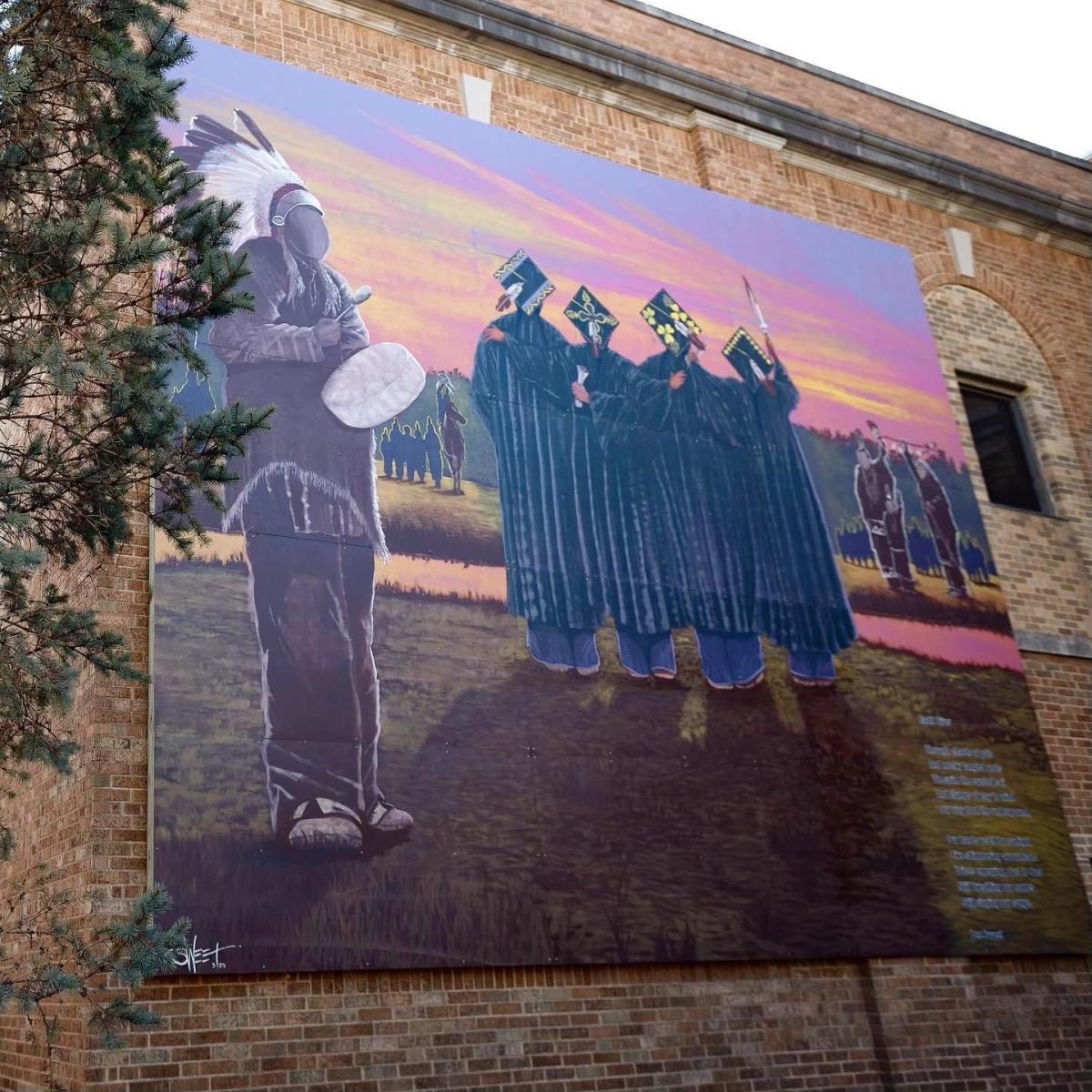
The Ho-Chunk, led by Big Hawk, or Kerejųxetega, visited town often and stayed in a jack pine grove a mile away from downtown. Until 1894, this land stood empty because both Ho-Chunk and Potawatomi people were buried there. The state then purchased the land and built the State Normal School, which became the University of Wisconsin – Stevens Point. The burials were not officially recognized until 2018. Since then, they have been memorialized by the Ancestors Buried Below Us mural, accompanied by an outdoor exhibit and garden open to the public year-round.
Remembrance
The legacy of indigenous peoples still shines in Stevens Point today. The Portage County Historical Society seeks to preserve the history of First Nations Music. Attend one of their regular lecture series to learn more about Wisconsin's original inhabitants.
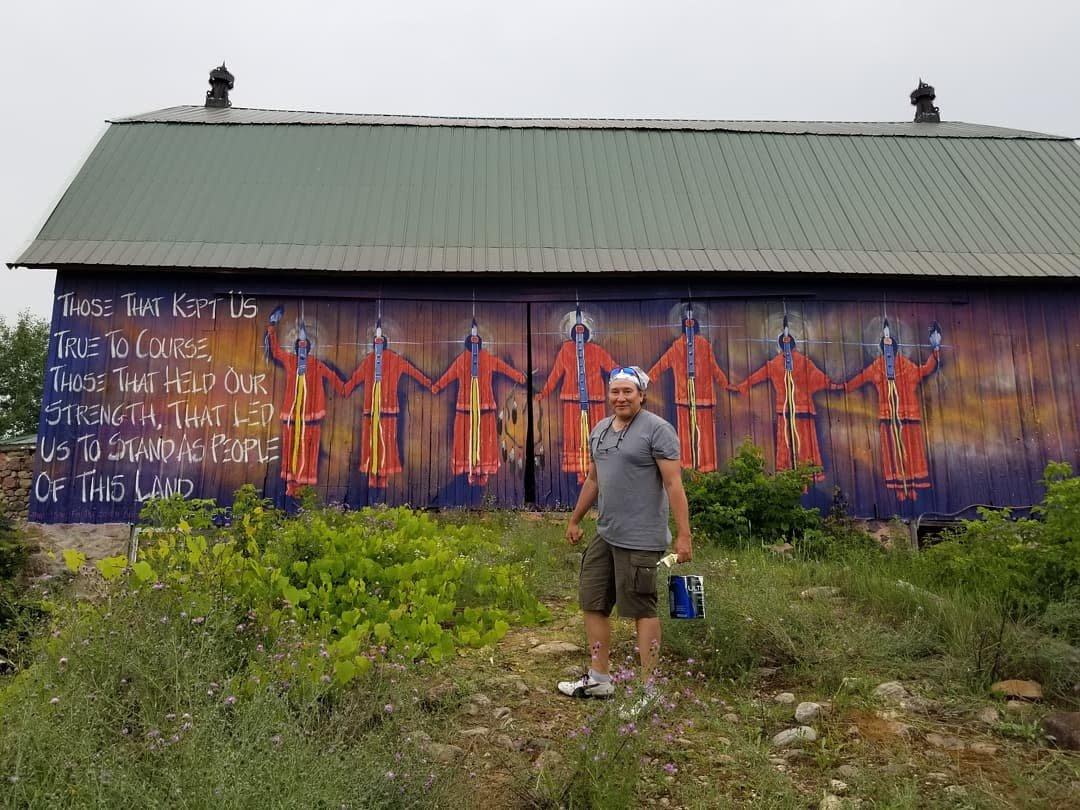
Visit the Ancestors Buried Below Us and Seven Sisters murals! Both were created by Chris Sweet (Ho-Chunk: Huuc Coo Ga), a Ho-Chunk and White Earth Ojibwe artist. Chris has also been a part of creating the interpretive trail signage for the Plover River Crossing, opening in September, 2026.
Established in 1970, the UW Stevens Point Native American Center seeks to educate about and revitalize Indigenous cultures and history in Stevens Point. Be on the lookout for their campus and community events, and check out the current UWSP Land Acknowledgement Statement.
Each May, the NAC partners with the student organizations American Indians Reaching for Opportunity and American Indian Science and Engineering Society, holding a Powwow to mark Native American Awareness Week. Enjoy dancing, traditional food, speakers, and Indigenous vendors and creators while learning about the past, present, and future of Stevens Point. This year's event will be held May 2, 2026.

